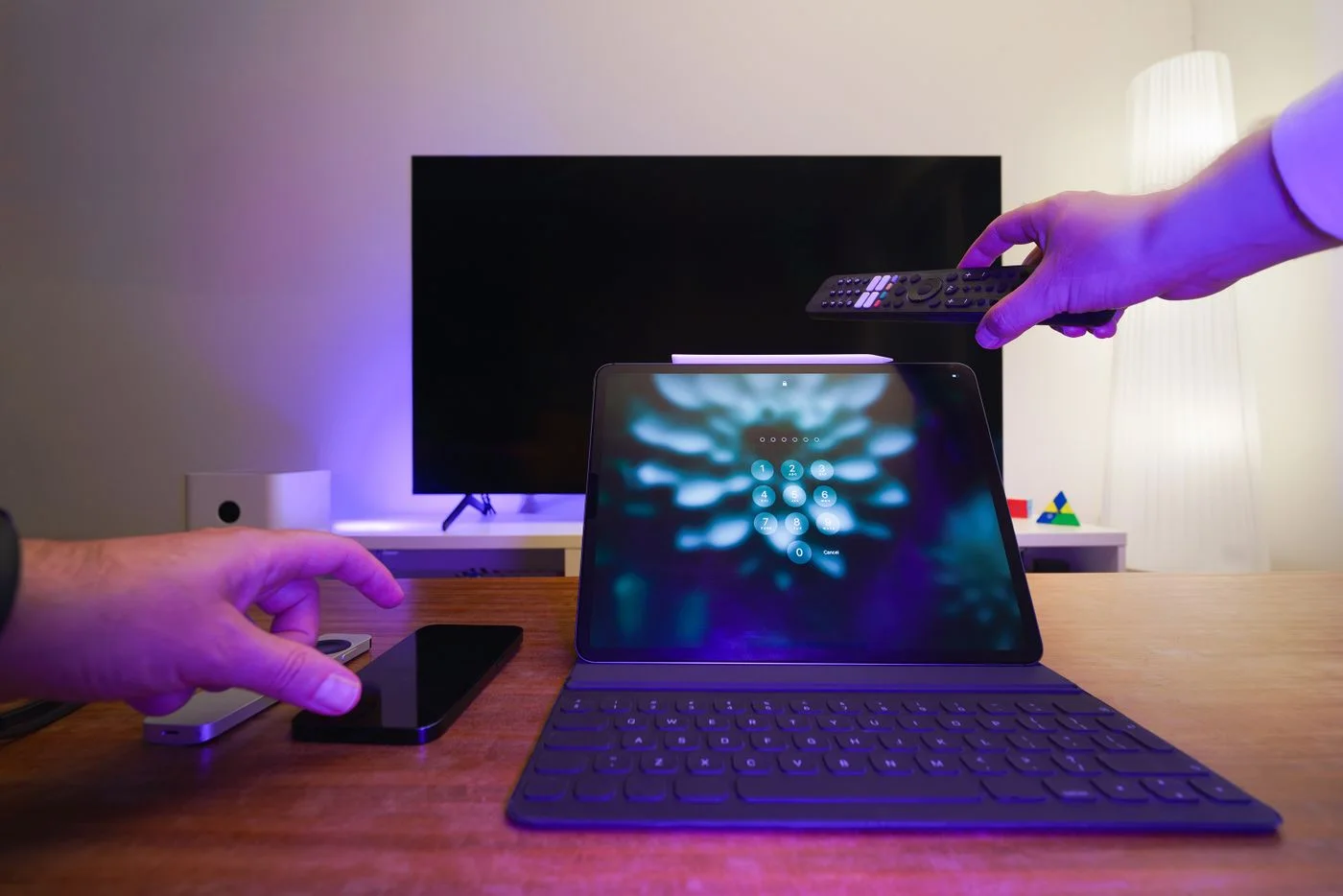
You can hear every line of a scene and still miss the exchange that matters. A character may answer politely while someone behind them notices an object, or the camera may remain on a face after the conversation ends. If you are using another screen, the question is not whether you have behaved like a proper viewer. It is whether the information you want from this programme is reaching you.
Listen for what the image is doing separately
During a familiar episode, look for a moment whose meaning changes if you only hear it. An ordinary greeting may become tense because the visitor stands too close to the door. A pause may be comic because two people avoid looking at the same object. These are small examples of why dialogue alone does not always carry the scene.
When a new series repeatedly leaves you confused about basic actions, try one uninterrupted episode before concluding that its storytelling is unclear. Put the other device somewhere that requires a deliberate movement to reach. This is an experiment about the programme, not a permanent rule for every evening. If the experience improves, you have identified a workable setup.
Choose the interruption instead of letting it spread
If you need to answer a message, pause at a sensible break and return when you are ready. Trying to follow two separate conversations can leave both unfinished. In shared viewing, agree on whether a pause is welcome; silently continuing while someone else misses a crucial scene can create more interruption when they need an explanation later.
Looking up an actor can also lead further than expected. A cast biography, suggested clip or character page may disclose later developments. Write down the name or question and investigate after the episode if it is not essential. You preserve the curiosity without turning a quick check into an accidental preview of the story.
Some evenings you may want a familiar comedy in the background, and that is a different intention from closely following a new mystery. Choose accordingly. The useful adjustment is to match the series and the setting to the amount of attention you actually want to give, then notice whether that choice is satisfying.